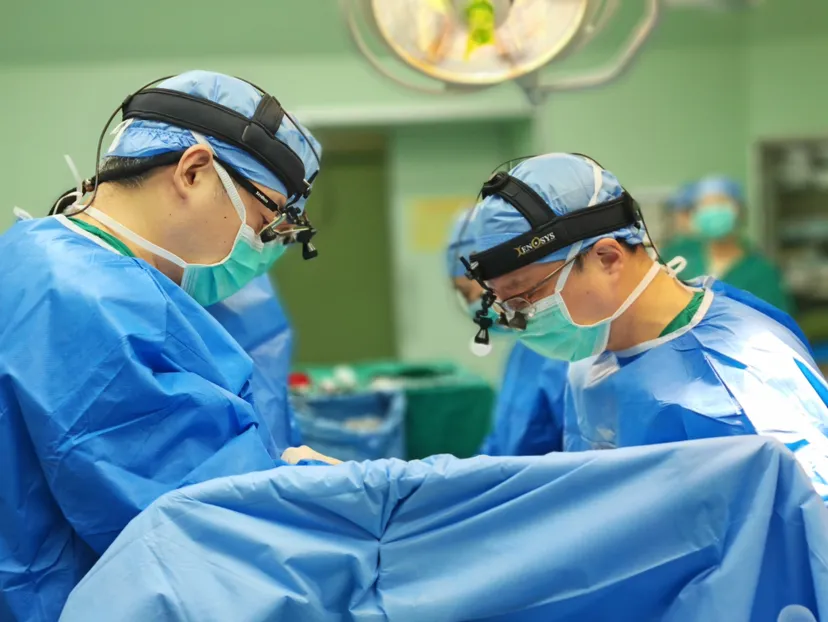
Recently, the First Affiliated Hospital of Jinan University, working jointly with Teda International Cardiovascular Hospital, performed an artificial heart implantation for a patient with end-stage heart failure. The device — known as "Rocket Heart 2.0" (HeartCon II) — is a fully domestically developed, fully magnetically levitated left ventricular assist device (LVAD) weighing only 75 grams, currently the smallest artificial heart in the world by both size and weight. The device is now running smoothly inside the patient, who is recovering well.
A Small, Light "Artificial Heart"
Mr. Wang, in his 50s, had spent nearly two years trapped by heart failure: chest tightness and breathlessness after the slightest exertion, a rest every few dozen meters on a short walk, gasping unbent after a single flight of stairs. At night he could not lie flat — he could only sleep propped up on high pillows in a half-sitting position.
For patients with end-stage heart failure, heart transplantation is the preferred curative option — but donor hearts are scarce and require strict matching. An artificial heart, or mechanical circulatory support, offers a new treatment choice. Yet the high cost had made Mr. Wang and his family hesitate.
The turning point came when he visited the Department of Cardiac and Vascular Surgery at the First Affiliated Hospital of Jinan University. The team led by Dr. Zhang Xiaoshen, Vice President of the hospital and Chief Physician, carried out a full multidisciplinary evaluation and found that he met the recruitment criteria for the clinical trial of Rocket Heart 2.0. Joining the trial would give him access to China's latest homegrown artificial heart — along with a substantial reduction in treatment costs.
About Rocket Heart 2.0 (HeartCon II)
- Fully domestically developed, fully magnetically levitated ventricular assist device
- Whole device weighs only 75 grams — the smallest artificial heart today by both size and weight
- Upgraded durability, hemocompatibility and operational safety compared with the previous generation
Mr. Wang decided to seize the chance at a better quality of life and longer survival.
Implanted on a Normally Beating Heart
To minimize trauma, the teams from the two hospitals held multiple rounds of joint case discussions before surgery. During the operation they innovatively adopted a bilateral mini-incision approach, completed the entire implantation without relying on cardiopulmonary bypass — all performed while the heart was beating normally.
Compared with conventional open-chest surgery, the minimally invasive route causes less bleeding and a lower risk of postoperative complications, creating the conditions for rapid recovery.
After surgery, the artificial heart has been running smoothly, and the patient's hemodynamic indicators have improved markedly. He is now able to get out of bed on his own for rehabilitation training, with heart rate, blood pressure and other vital signs stable — a recovery that has exceeded expectations.
A Bridge to Transplant — or a Lifetime Companion
Dr. Zhang Xiaoshen explained that this type of artificial heart can serve in two ways: as a "bridge to transplant," sustaining the patient's life while waiting for a suitable donor heart; or as a long-term therapy, assisting the heart's pumping for life, improving the patient's capacity for activity and extending survival time.
Chronic heart failure is not a standalone disease but the combined end-stage manifestation of coronary heart disease, cardiomyopathy and other cardiovascular conditions. In reality, many people mistake it for ordinary aging or weakness — and delay treatment.
"Most heart failure patients never need to reach the surgical stage," Dr. Zhang said. "With long-term, standardized medication, adjusted routines and diet, and consistent professional cardiac rehabilitation training, the progression of the disease can be slowed." He reminded the public to seek prompt medical evaluation if they frequently experience chest tightness or breathlessness after walking or housework, unexplained fatigue, difficulty breathing when lying flat at night, or long-standing swelling of the legs.
Cardiac Excellence Across Our Partner Network
Stories like this from Foshan Chancheng Hospital's partner hospitals reflect the strength of the Fosun healthcare ecosystem's cardiac network. Foshan Chancheng Hospital's own Heart Hospital carries out TAVR and MitraClip structural heart interventions, while its multidisciplinary cardiac team works hand-in-hand with leading cardiac centers through the network — so that patients can access the right treatment, at the right center, at the right time.
From a 75-gram fully magnetically levitated artificial heart to transcatheter valve therapies, China's cardiac innovation is giving end-stage heart failure patients what they need most: more options, less trauma, and a longer, better life.