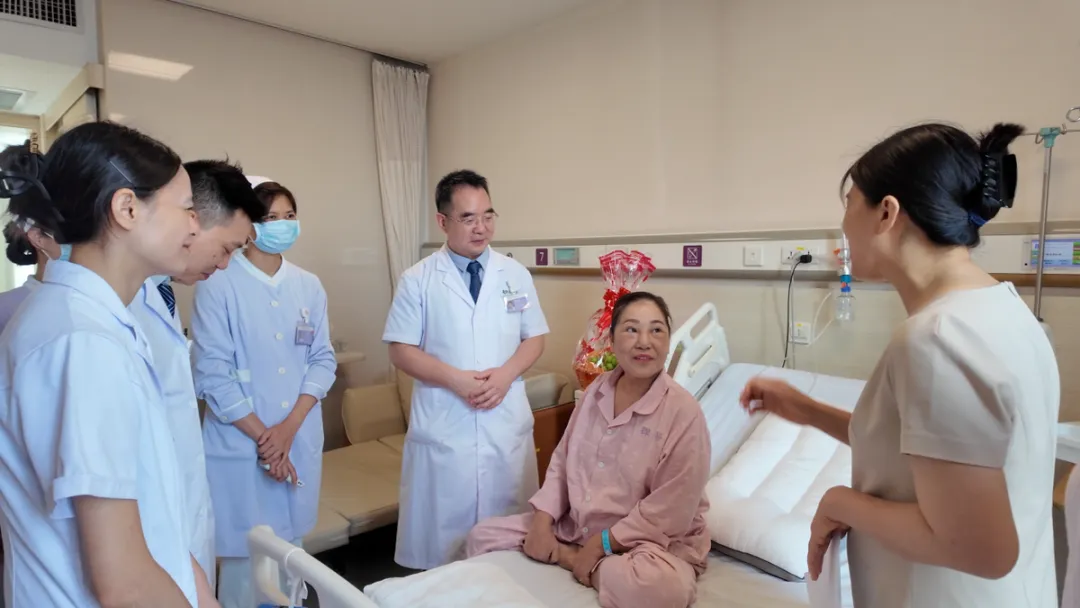
When Ms. Nguyễn Thị Phương from Vietnam noticed a suspicious shadow on a routine health check, she did not wait to see what happened. A month later, she was in the operating room at Foshan Chancheng Hospital — part of the hospital’s Foshan International Medical Center (FIMC) — undergoing a precise, minimally invasive da Vinci robotic right lower lobectomy.
Over 20 days in hospital, she received not only a successful surgery but also coordinated visa support, multilingual interpretation and Vietnamese-style meals — care that made her feel, as she put it, "as if I were in my own country."
“I believe that by coming to China, to this hospital, my condition will be properly taken care of.”
Cross-Border Trust: Choosing Foshan Over Uncertainty
Ms. Nguyễn’s decision to travel abroad was shaped by two things: her own positive impressions of China from previous visits and a friend’s direct recommendation of Foshan Chancheng Hospital.
After a chest X-ray in Vietnam showed a nodular shadow in her right lower lung, she made the journey to Foshan. There, the FIMC team quickly moved her into a structured evaluation pathway rather than leaving her to navigate appointments alone.
MDT Planning Before a Single Incision
Upon admission, the hospital convened a multidisciplinary team covering thoracic surgery, respiratory and critical care medicine, radiology and anesthesiology. The goal was to confirm the nature of the nodule and choose the safest, least invasive path to treatment.
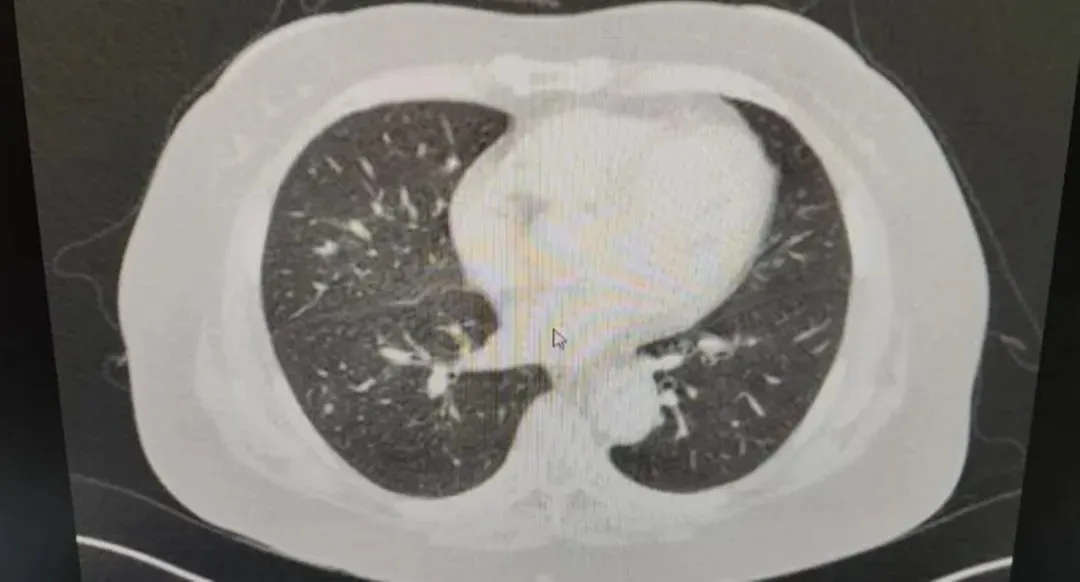
The work-up included high-resolution chest CT, PET-CT and pulmonary function tests. The team concluded that surgical resection was needed to establish a definitive diagnosis, and recommended a da Vinci robotic approach to maximize precision and support rapid recovery.
da Vinci Robotics: Three Technical Advantages
Dr. Song Changshan, Director of Thoracic Surgery at Foshan Chancheng Hospital, explained why the da Vinci system was chosen for this case:
Why da Vinci robotic surgery
- 10× 3D high-definition vision — magnified, depth-perceived visualization of fine thoracic structures.
- 7 degrees of freedom — wristed instruments that bend and rotate beyond the reach of standard laparoscopic tools.
- Tremor filtration — robotic scaling removes natural hand tremor for safer dissection near vessels and bronchi.
These features are especially valuable in lung surgery, where the surgeon must identify and protect the pulmonary artery, pulmonary vein and bronchus while removing the diseased lobe.
The Operation: Controlled, Minimally Invasive, Without Rib Spreading
During the procedure, Dr. Song’s team used a mature minimally invasive approach. Through small robotic ports, they identified the pleura, lobar vessels and bronchus, carefully separated the interlobar fissure, and sequentially divided the right lower lobe artery, vein and bronchus before removing the diseased lobe.
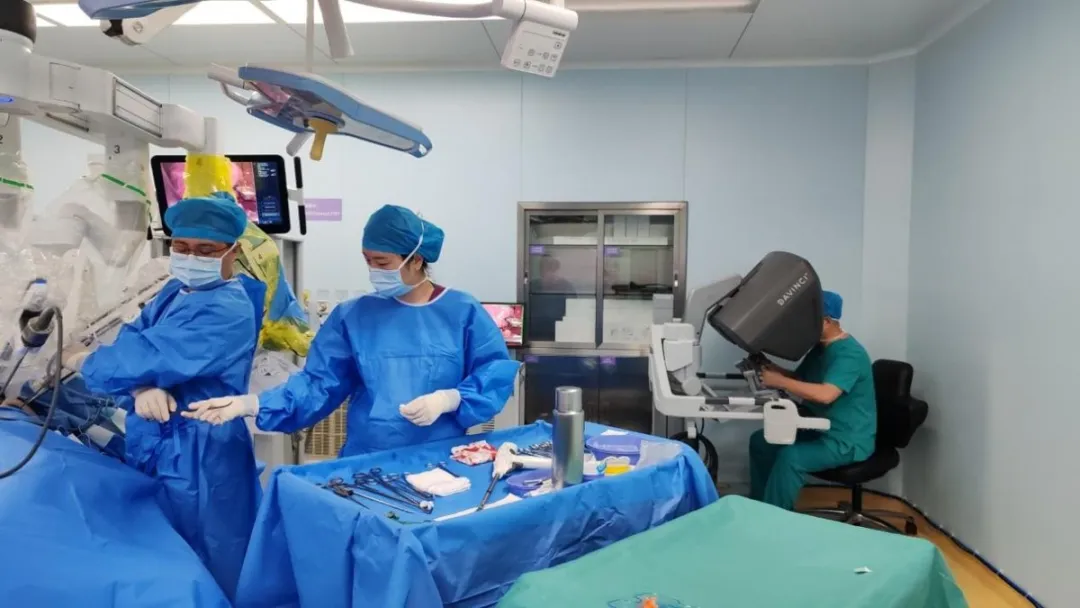
The operation was completed within a controlled duration, with minimal blood loss, no surrounding tissue injury and no air leak. Because no ribs were spread, post-operative chest-wall pain and recovery time were substantially reduced compared with traditional open surgery.
International Patient Services: Beyond the Operating Room
One concern almost derailed the plan: Ms. Nguyễn’s visa-on-arrival was not long enough to cover her full treatment and recovery. The FIMC international services team stepped in immediately and helped her complete a visa extension so her old and new visas connected seamlessly.
Throughout the stay, the team provided:
- Multilingual guidance and appointment escorting
- Real-time interpretation before and after surgery
- Vietnamese-style meal coordination
- Regular follow-up planning after discharge
“Everyone here is so warm — the doctors, the nurses, the care staff,” she said. “Even though I’m abroad, their care made me feel as if I were in my own country.”
A Story That Travelled by Word of Mouth
Ms. Nguyễn had come on a friend’s recommendation, but her own experience became a new recommendation in turn: another friend was admitted to FIMC for treatment after hearing her account. Before leaving, she looked into the camera and said, “If you have similar concerns, please come for an early check-up. I would gladly recommend this place to anyone in need.”
From Vietnam to Foshan, the case illustrates how precise robotic surgery, multidisciplinary planning and attentive international services can combine into a single, reassuring patient journey.