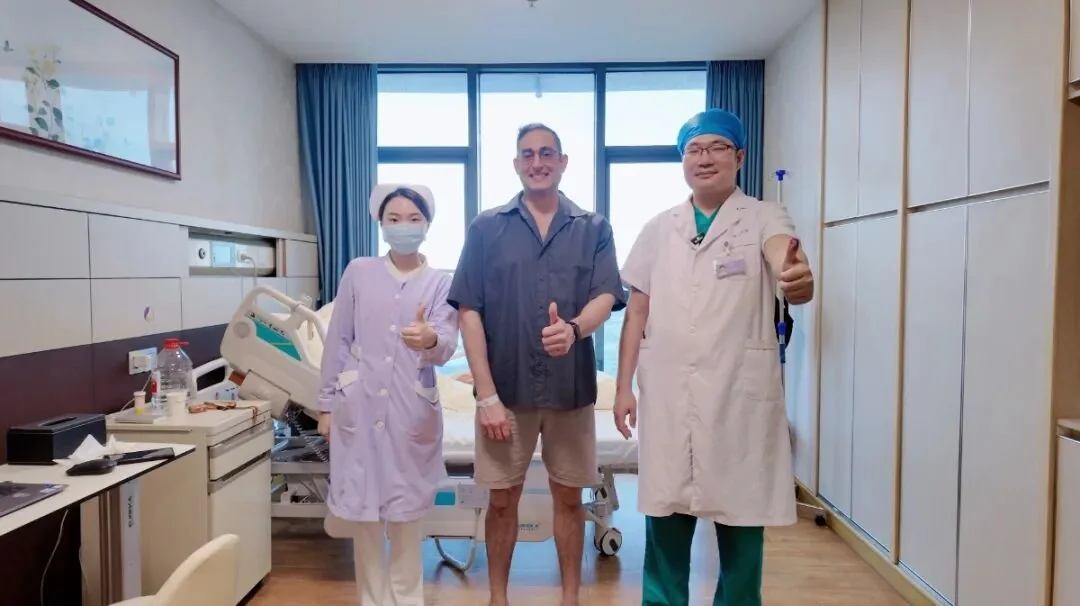
Arian arrived in China in 2010 to teach, and has spent the fifteen years since in Foshan. In that time the city stopped being a posting and became a home — which is why, when his body began to fail him, he did not think about where to go. He thought about who he already trusted.
He has now had two operations at Foshan Chancheng Hospital, on two different joints, two years apart. The first was an emergency of function: a torn meniscus in his right knee. The second was the slow accumulation of a shoulder that never recovered from an ordinary fall. Neither was his reason for choosing the hospital. The first one was.
A Knee, and the Beginning of Trust
His right knee was the first test. The meniscus — the cartilage pad that takes the load between thigh bone and shin — had torn, and the pain was interfering with the basic business of walking. Dr. Luo Zhen performed the repair, and Arian remembers the outcome in the plainest terms available to a patient: he could move properly again.
What stayed with him, though, was not the operating theatre. It was the period afterwards, when a care team of doctors, nurses and therapists walked him through rehabilitation with an attentiveness he had not expected. The technical result restored his knee. The way he was treated during recovery is what made him file the hospital away under a word he would later use without prompting: trust.
Two and a Half Years of a Shoulder That Would Not Settle
The shoulder began with an accident at a train station. What followed was not dramatic — just a left shoulder that hurt, and kept hurting, for two and a half years. It is the kind of pain that is easy to negotiate with: you adjust how you sleep, how you reach, how much you lift, and the days blur into a tolerable compromise.
His MRI did not compromise. Scan after scan recorded the injury getting worse, until the recommendation from the doctors who reviewed them was unanimous: this needed surgery. Arian did not ask for a second opinion elsewhere. He said he wanted to go back to Foshan Chancheng Hospital, because the people there were the ones he trusted.
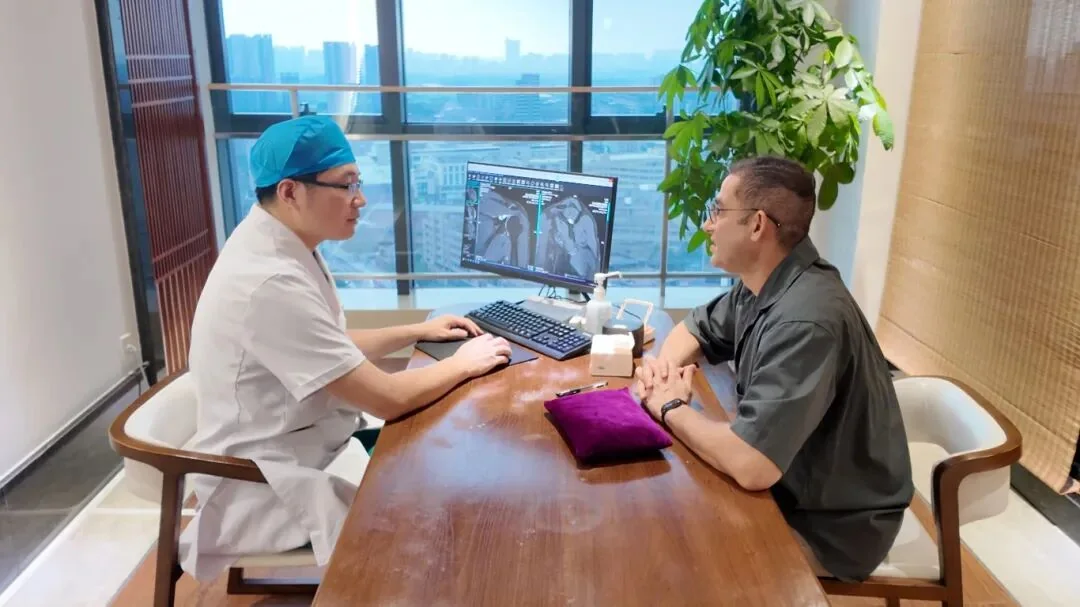
This time the operation was led by Dr. Miao Guiqiang, Director of the Department of Sports Medicine and a German-trained specialist. The procedure was an arthroscopic labral repair of the left shoulder — keyhole surgery to reattach the ring of cartilage that had been torn inside the joint.
What the Labrum Is, and Why It Tears
The labrum is a rim of cartilage running around the edge of the shoulder socket, and its job is mechanical rather than decorative. It deepens the socket, stabilises the joint, and cushions the pressure that passes through it every time the arm moves. It is also, Dr. Miao explains, easy to damage in a very particular way.
"Labral tears are common among fitness enthusiasts and among people who regularly perform overhead movements — weightlifting, badminton, and similar sports," he says. When the head of the upper-arm bone repeatedly collides with the labrum, the cartilage can tear. The consequences are the ones Arian lived with: pain, and a joint that will not move through its full range.
His advice to anyone training hard is deliberately unglamorous. Prevention matters far more than treatment, and the first line of prevention is restraint — avoid excessive and repetitive overhead work, and give the joint load it can recover from. The second line is a deadline: if shoulder pain lasts more than two weeks, get it examined. Two and a half years is what happens when that deadline passes unmarked.
For patients weighing up surgery, the detail that matters is that this is not an open operation. Arthroscopic repair works through small portals, which means less trauma to the muscles and capsule around the joint — and, for a patient whose priority is returning to normal life, a shorter road back.
Five Days, and the Details That Stay With You
Arian spent five days in hospital. Asked what he remembers, he does not describe the surgery. He describes being watched over: nurses who came to check on him every half hour, in a way he compares to family; doctors who saw him in person twice a day to look closely at how he was recovering.
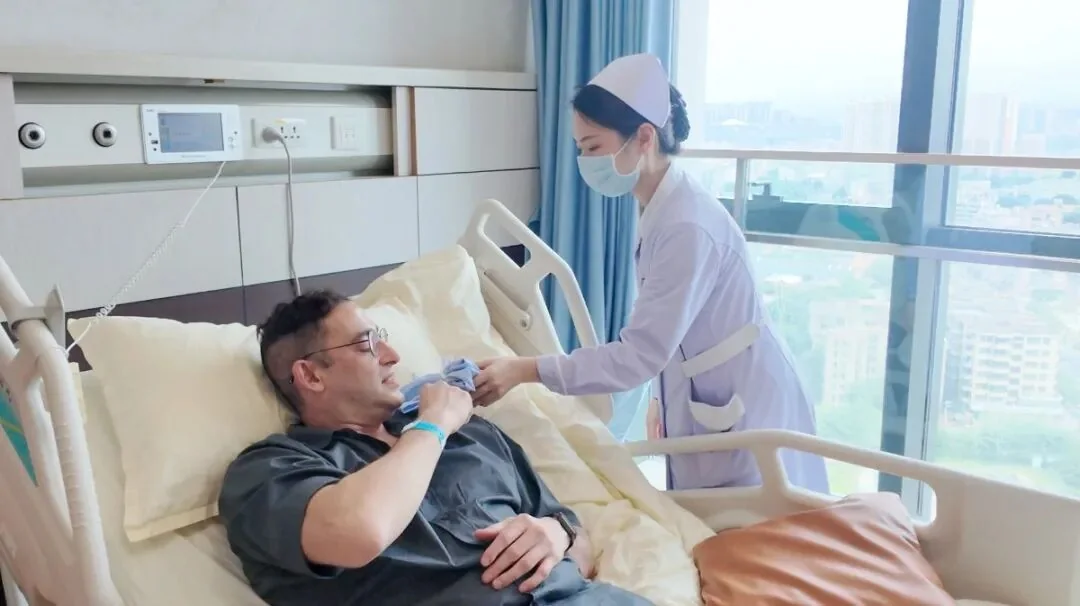
Nothing was treated as a small request. Meal arrangements, special nursing needs, questions that came up at odd hours — the response was immediate and specific, he says. It added up to a kind of care he describes as seamless, and then says plainly he has not experienced anywhere else.
As a holder of high-end commercial insurance, he also had a practical test to run, and it is here that many international patients expect friction. Instead, the international medical team took on the parts that are hardest to manage from a hospital bed: booking appointments, carrying communication between him and his doctors, and processing the insurance claim. "The only thing I had to do," he says, "was focus on the surgery and the recovery."
He speaks fluent Chinese, so language was never his barrier — which is exactly why his comment on the subject carries weight. Foshan has a large foreign community, and not all of it is comfortable in Mandarin. For those patients, he says, the hospital provides mother-tongue support across the whole process, from explaining the diagnosis to guiding rehabilitation. The gap that makes some expatriates delay care in China is the one thing the hospital had already closed.
Recovery, and a Recommendation Without Hedging
Arian is now somewhere in the three-to-six-month rehabilitation that follows a labral repair. He is not treating it as a period of uncertainty. The surgery, he says, was precise; the rehabilitation plan is scientific; and he has a reference point for what a good outcome feels like, because his knee was there two years ago.
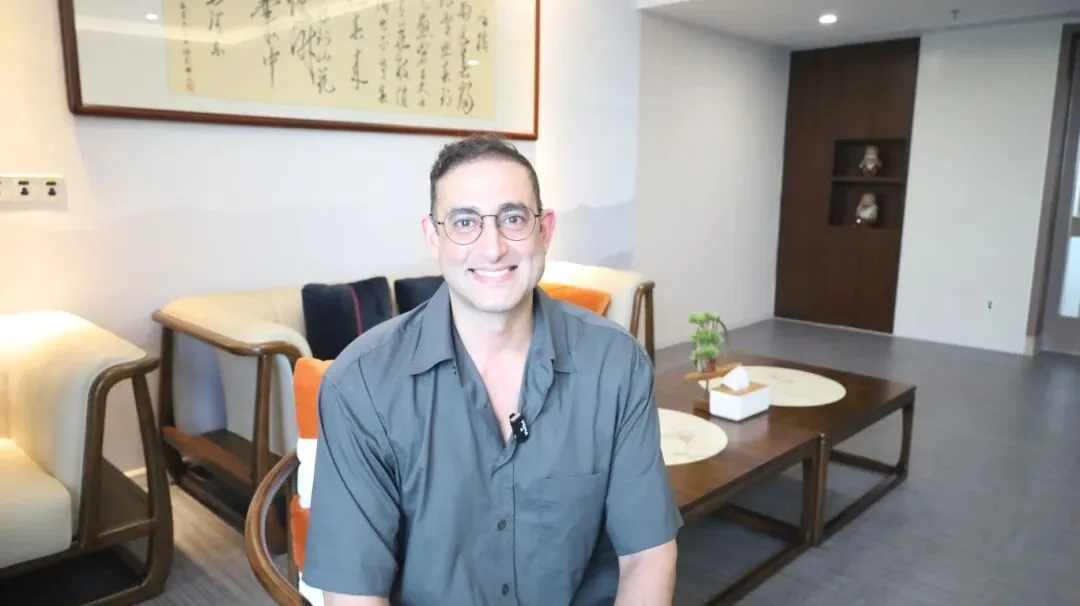
Pressed on why he would recommend the hospital to other foreigners living in Foshan, he gives three reasons and does not pad them: medical capability, service that is genuinely attentive, and insurance handling that does not become the patient's second job. Choosing a hospital, in his framing, is choosing somewhere to place your peace of mind — and he does not think a fourth reason is required.
What Two Surgeries Reveal That One Cannot
A single good outcome can be luck. A second, elective return is evidence. The distinguishing feature of Arian's case is not the complexity of either operation — meniscus repair and labral repair are both established, high-volume procedures in a hospital of this size. It is that he made the choice twice, with full knowledge of what the experience would involve, from a position where he could have gone anywhere.
That is the specific thing international patients are trying to assess when they read a hospital website from another country: not whether a procedure is available, but whether the system around it will hold when the patient is alone, in a second language, far from home. For Arian the answer came in increments — a knee that worked again, nurses who checked every half hour, an insurance claim that never became his problem — and then, two and a half years later, in the sentence he used before anyone had finished recommending surgery.
Living in China with a joint injury that has not settled? Our sports medicine and international patient teams can review your MRI and imaging before you travel, and explain the surgical and non-surgical options in your own language.