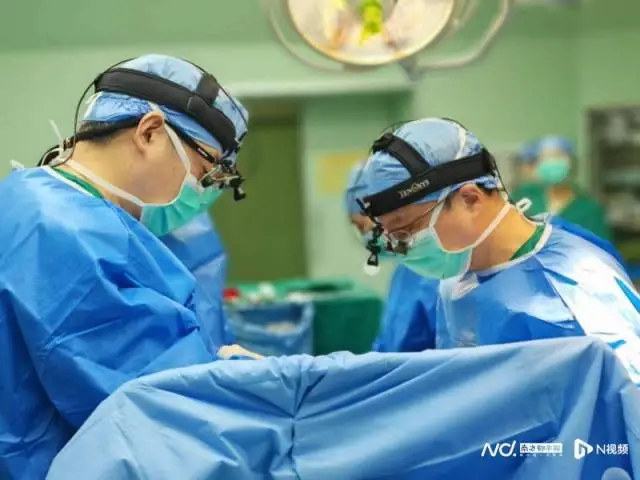
The First Affiliated Hospital of Jinan University, a key cardiac partner within the Foshan Chancheng Hospital network, has successfully completed its tenth left ventricular assist device (LVAD) — or "artificial heart" — implantation, reopening the door to life for a middle-aged truck driver with severe heart failure. The patient developed heart failure after a major myocardial infarction; during nearly two months of hospitalization his condition kept deteriorating, and with almost every treatment option other than heart transplantation exhausted, his family had nearly given up hope. It was artificial heart technology that brought him back from the edge.
Ignoring a nagging chest pain until it became a heart attack
Uncle Zhao, in his early 50s, was a long-haul truck driver who spent his days on the road. With the freight market in a slump, he drove almost daily on the highway or waited at loading points to earn more for his family — his daily routine completely disrupted, and his smoking steadily increasing to stay alert.
"Driving all day, staying up at night, eating whenever I could — and whenever something felt wrong with my body, I just pushed through it," he said with a bitter smile. In fact, half a year earlier he had often felt chest tightness and a dull pain when carrying goods or climbing stairs, easing after a short rest. He assumed it was just age and fatigue and never saw a doctor — until the day of the attack.
"After dinner that evening, I was walking home when my chest suddenly felt crushed by a huge stone. I could hardly breathe — it had never been that bad," Uncle Zhao recalled of the frightening scene two months earlier. "I hurried to call my family, but before I could finish speaking, I lost consciousness."
That collapse was the beginning of a nightmare. Rushed to hospital, he was diagnosed with acute myocardial infarction. Doctors quickly reopened the blocked vessel, but the delay had already killed part of his heart muscle. From then on his condition went downhill — long stays in intensive care, frequent breathlessness requiring non-invasive ventilation, an inability to lie flat at night, and speech so weak it was barely a whisper.
"Every morning I woke up grateful to still be alive — it felt like wandering along the edge of a cliff," he said quietly. To sustain his life he depended on large doses of cardiac stimulants, diuretics and multiple devices supporting his heart. Each deterioration meant another family talk and another consent form — thin sheets of paper that weighed on the whole family like a mountain. After nearly a month of intensive treatment with the illness still relapsing, patient and family had sunk close to despair.
Then came the turning point: the family sought out Dr. Zhang Xiaoshen, Vice President of the hospital and a specialist in cardiac and vascular surgery, as a last hope.
Multidisciplinary teamwork turns the danger around
After a careful evaluation, Dr. Zhang concluded that the patient could no longer tolerate conventional open-chest valve surgery — the feasible option was left ventricular assist device implantation (LVAD) to take over part of the heart's pumping function.
The Department of Cardiac and Vascular Surgery immediately joined forces with cardiology, anesthesiology, imaging, rehabilitation and nutrition for multidisciplinary consultations. The experts worked through the case in depth and drew up a thorough preoperative assessment plan and perioperative management strategy, finally agreeing to proceed with the artificial heart surgery without delay.
In the operating theatre, Dr. Zhang's team completed each critical step in steady sequence — the apical incision, precise implantation of the blood pump, and meticulous suturing of the vascular graft. The whole procedure went smoothly and ended in success.
After surgery, Uncle Zhao was transferred to the cardiac surgery ICU for close observation. Thanks to thorough preparation, standardized operative technique and meticulous postoperative management, his recovery progressed rapidly: the tracheal tube was removed on postoperative day 2, and he stepped down to the general ward on day 5. Now, accompanied by his family, he is actively training in rehabilitation, in high spirits and full of hope for the future.
His family could hardly contain their gratitude: "We truly believed there was no hope left. It was President Zhang and his team who pulled us back from the abyss at the moment of life and death."
Artificial heart technology rescuing "hearts of last resort"
The left ventricular assist device is a pioneering technology in end-stage heart failure. Its core principle is to use mechanical power to help the left ventricle pump blood, easing the burden on the heart and opening more opportunities for survival and recovery.
"Heart failure does not form overnight — it is more like a time bomb quietly accumulated over years of hypertension and coronary heart disease, or, as in Uncle Zhao's case, a sudden heart attack that derails the heart's work for good," Dr. Zhang noted. "A considerable number of patients simply cannot tolerate the risk and trauma of conventional surgery. In those moments, ventricular assist therapy becomes the last line of defense saving a patient's life."
As ventricular assist technology matures, more and more patients are choosing to live long-term with a pump. The ten artificial heart surgeries completed by the hospital have reversed the trajectory of ten end-stage heart failure patients, giving each of them a chance at life. "This shift brings new treatment options and new hope to heart failure patients in critical condition," Dr. Zhang said.
About LVAD (Artificial Heart) Therapy
- Mechanical pump that assists the left ventricle in circulating blood, reducing the heart's workload
- Serves as a "bridge to transplant" while waiting for a donor heart — or as long-term "destination therapy" for life
- An option for patients who cannot tolerate conventional open-heart surgery
Cardiac excellence across our partner network
Stories like this from Foshan Chancheng Hospital's partner hospitals reflect the strength of the cardiac network behind the Fosun healthcare ecosystem. Foshan Chancheng Hospital's own Heart Hospital carries out TAVR and MitraClip structural heart interventions, while its multidisciplinary cardiac team works hand-in-hand with leading cardiac centers across the network — so that patients can access the right treatment, at the right center, at the right time.
From a tenth artificial heart implantation to transcatheter valve therapies, China's cardiac innovation is giving end-stage heart failure patients what they need most: more options, less trauma, and a longer, better life. If you or a loved one experiences chest tightness, breathlessness on exertion or difficulty lying flat at night, seek cardiac evaluation promptly — early treatment can prevent the point of no return.