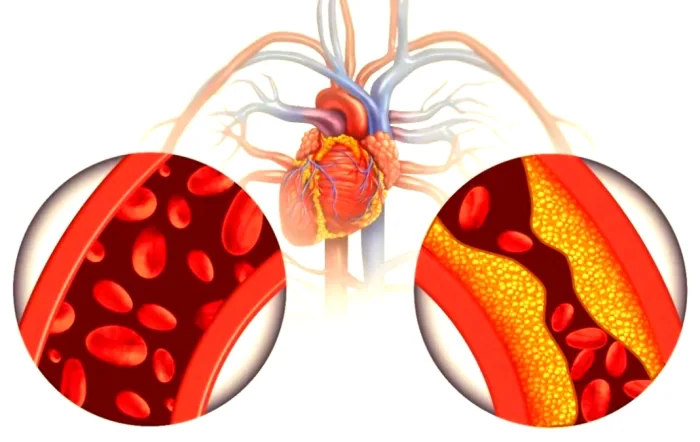
There is an old saying among interventional cardiologists: fear nothing in heaven or on earth, except a calcified coronary artery. When calcium settles into the wall of a coronary artery, the vessel no longer behaves like living tissue. It becomes rock. Angina and myocardial infarction follow, and so does the most stubborn problem in the catheterisation laboratory: a lesion that balloons cannot crack and devices cannot cross.
Since 2023, an innovative dual-effect orbital atherectomy system has been reachable in Foshan through the HK-Macao Drug & Equipment Connect policy channel. This is how it works, and who it is meant for.
What Calcium Does to a Coronary Artery
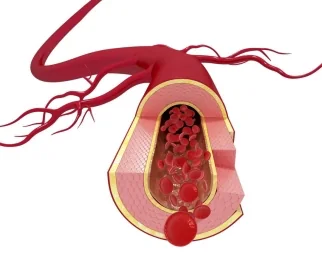
Coronary calcification is the end result of atherosclerosis that has been building for years. The sequence is well understood: the endothelial lining is injured, lipids deposit in the wall and form plaque, calcium salts gradually precipitate into that plaque, and chronic inflammation accelerates the whole process — drawing still more calcium into the lipid-rich areas.
The mechanical consequences matter more than the chemistry. A calcified artery loses its elasticity, so it cannot dilate. The lumen narrows, or closes altogether, and blood flow falls. That is the substrate for exertional angina, for acute coronary syndrome, and for myocardial infarction.
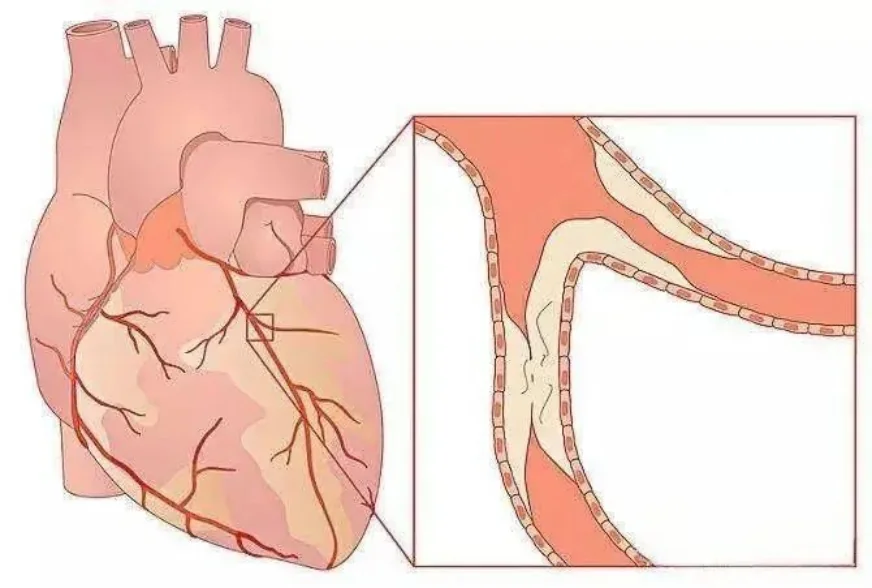
Calcification also changes the arithmetic of treatment. A balloon inflated inside a calcified lesion may simply fail to expand at the pressure it was designed for; a stent that cannot reach full expansion cannot hold the vessel open properly, and the risk of restenosis rises. Before any stent can work, the calcium itself has to be modified. Rotational atherectomy exists for exactly that purpose.
Two Mechanisms in One Burr
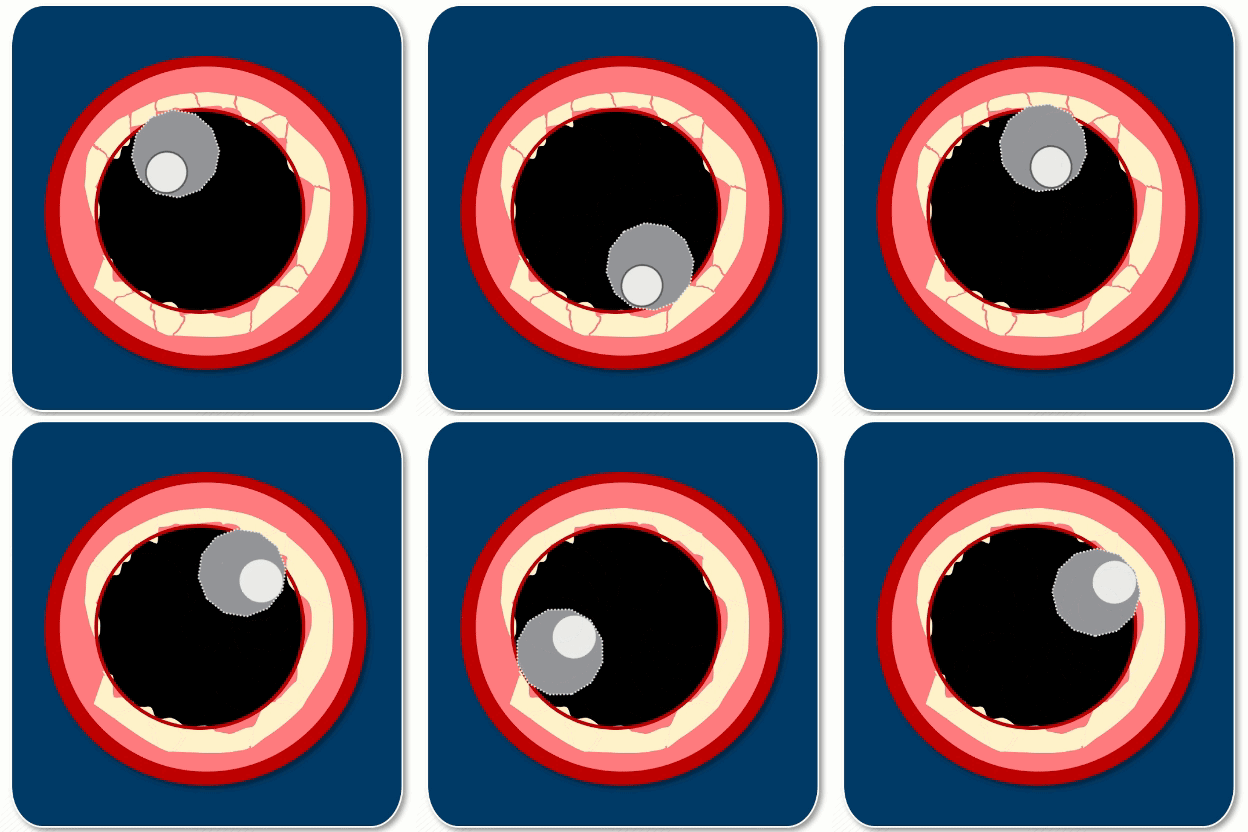
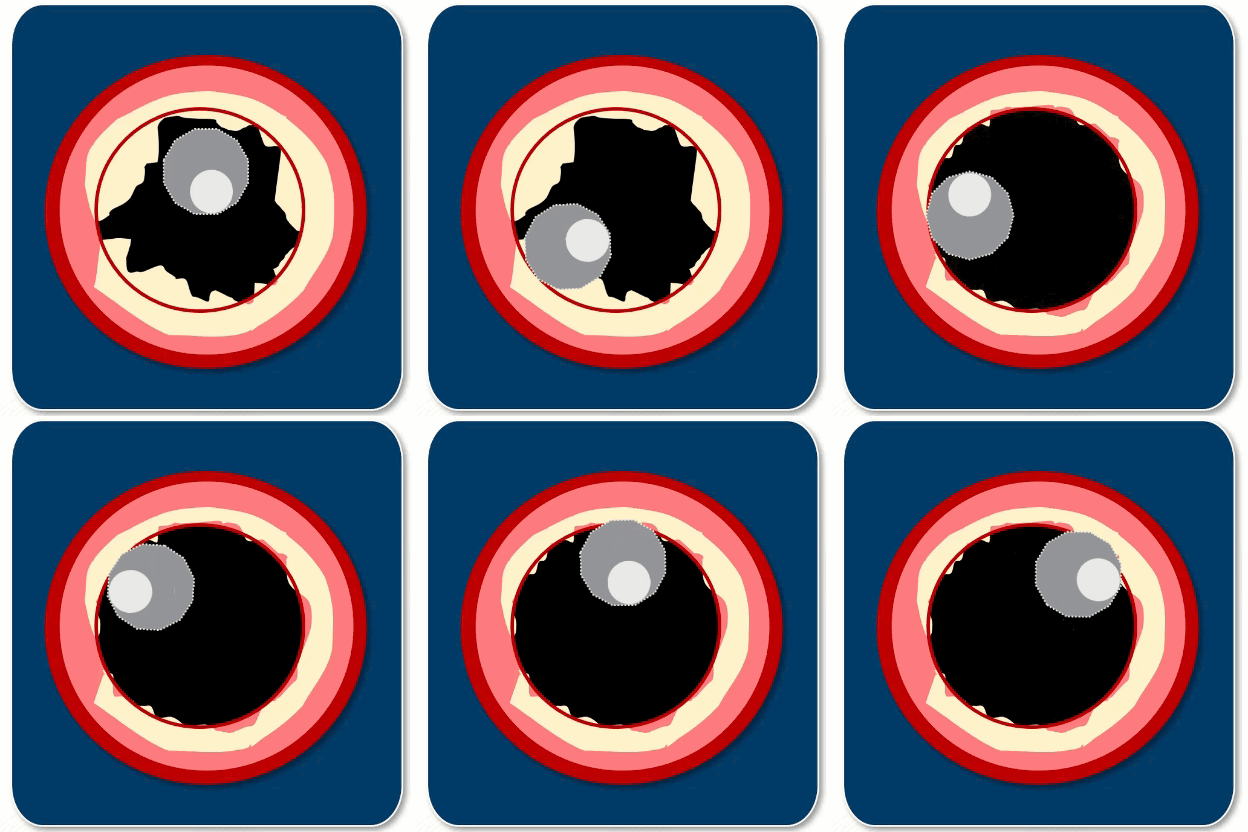
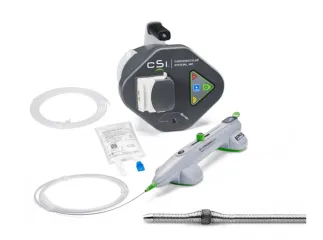
The system carries both US FDA and European approval. Its working element is a 1.25 mm eccentric crown coated with diamond grit, mounted on a dedicated guidewire. Spun at high speed, centrifugal force pushes the crown outward so that it contacts the vessel wall through a full 360 degrees, ablating the calcium that protrudes into the lumen.
The second mechanism is separate, and it is the reason the device is described as dual-effect. High-frequency centrifugal oscillation is transmitted into the wall, fracturing and loosening calcium deeper than the burr can physically reach — the effect clinicians call pulsatile force. Superficial calcium is sanded away; deep calcium is cracked. The vessel regains enough compliance for a balloon to expand and a stent to sit.
Who It Is For
The Chinese expert consensus on the diagnosis and treatment of coronary artery calcified lesions, published in 2021, sets out three groups of patients for whom orbital atherectomy is considered:
Severe calcified lesions, where conventional balloon dilation or stent implantation cannot achieve an adequate result and the calcium has to be removed before the vessel can be reopened.
Total occlusion with calcification — long, completely closed segments, particularly where calcium is present, in which atherectomy can help reopen the vessel and raise the chance of procedural success.
In-stent restenosis with severe calcification, in patients who have already been treated with a stent and return with narrowing and calcium inside or around it.
Put simply, the technique is reserved for lesions that ordinary tools cannot manage. It is not a first-line treatment for routine coronary disease, and it is not a substitute for good lesion assessment: CT, intravascular ultrasound or optical coherence tomography is what tells the team how much calcium is there and where it sits.
What Changes in the Catheterisation Laboratory
Efficiency is the first difference. One burr size covers vessels of different diameters and different patterns of calcium, and because the crown works through 360 degrees the whole circumference is treated rather than one side of it. Fewer device exchanges means shorter procedures.
Safety is the second. The orbit leaves a passage for blood and for continuous saline perfusion throughout the run, so the vessel is not occluded while the burr is working — which lowers the risk of slow flow and of the ischaemia that accompanies it.
Durability is the third. Better vessel preparation produces better stent expansion and apposition, and that is what translates into a lower restenosis rate over the following years. In calcified disease the quality of the preparation, not the stent alone, determines the long-term result.
In Foshan, Through HK-Macao Drug & Equipment Connect
In February 2023, Foshan Chancheng Hospital became one of the first designated institutions in Foshan for the HK-Macao Drug & Equipment Connect policy, which allows drugs and devices approved in Hong Kong or Macao to be used in designated mainland hospitals. Through that channel the hospital has introduced international innovative drugs and devices across oncology targeted therapy, cardiovascular intervention, orthopaedic joint regeneration and cochlear implants, serving nearly 900 patient visits to date.
The system described here is one of them. Foshan Chancheng Hospital has since completed the first clinical application of the coronary orbital atherectomy system in mainland China, with Academician Ge Junbo of Zhongshan Hospital, Fudan University, Professor Chen Jiyan of Guangdong Provincial People's Hospital and Professor Tam Koon Cheong of Kiang Wu Hospital in Macao taking part in the symposium and the procedure.
Read the report on the first clinical application in mainland China →
What to Ask Before You Decide
For a patient arriving from abroad, the useful questions are practical ones. How heavily is the lesion calcified, and was that assessed with intravascular imaging or with CT rather than angiography alone? Which debulking tool suits the anatomy, and what is the plan if the burr cannot cross? How many of these procedures has the team performed, and who covers the night after? And for a stay of this kind, how long in Foshan, and what does the follow-up look like once you are home?
The International Medical Center at Foshan Chancheng Hospital has coordinated care for patients from more than 100 countries since 2019, and can arrange pre-travel review of imaging, an opinion on whether atherectomy is likely to be needed, and a treatment plan with a realistic estimate of time in China.
Complex Coronary Care at Foshan Chancheng Hospital
- Heart Hospital performing TAVR, MitraClip and complex coronary intervention, including orbital atherectomy for severely calcified lesions
- Designated HK-Macao Drug & Equipment Connect institution since February 2023 — nearly 900 patient visits served with international innovative drugs and devices
- International Medical Center (FIMC) serving patients from more than 100 countries since 2019